YouTube Ads vs SMM Panel: Which Actually Builds Real YouTube Growth in 2026?
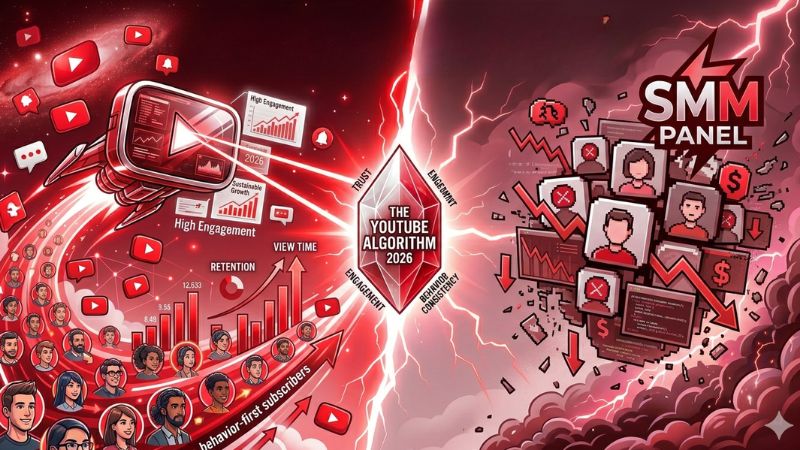
Growing a YouTube channel today is no longer about uploading videos consistently.
It is about one core thing:
How YouTube interprets audience behavior after people subscribe.
Most creators think subscriber count equals success.
But in reality, YouTube’s recommendation system does not reward subscribers — it rewards viewer behavior consistency.
That is why the debate between YouTube Ads and SMM Panels is not about “cheap vs expensive growth.”
It is about:
Algorithm trust vs artificial signal inflation
The Hidden Reality Most Creators Don’t Understand
From analyzing multiple YouTube growth patterns across different niches (education, entertainment, tech, and business), one consistent behavior appears:
Channels do NOT fail because of low subscribers.
They fail because of:
subscriber-to-view mismatch
weak returning viewer rate
unstable retention curve
poor engagement velocity
These signals matter more than subscriber count itself.
What Are YouTube Ads Really Doing?
YouTube Ads are not a “subscriber buying system.”
They are a behavior targeting system.
Instead of giving subscribers directly, YouTube Ads:
place your content in front of real viewers
test audience interest
measure watch behavior
distribute based on satisfaction signals
The Real Mechanism of YouTube Ads
When someone watches an ad, YouTube evaluates:
Did they continue watching?
Did they skip early?
Did they watch 30–60%+?
Did they interact later?
Only after this, subscription happens.
👉 This means:
YouTube Ads build “behavior-first subscribers,” not number-first subscribers.
What SMM Panels Actually Do (Behind the System)
SMM panels do not participate in YouTube’s behavioral ecosystem.
Instead, they:
inject subscribers from external networks
bypass natural discovery systems
do not create watch behavior
do not influence recommendation learning
Most subscribers from SMM systems:
never return
never watch content
never engage again
The Critical Problem
YouTube does not evaluate who subscribed — it evaluates what they do AFTER subscribing.
So when behavior is missing, the system detects imbalance.
YouTube Ads vs SMM Panel (Elite-Level Comparison)
Hidden Algorithm Truth (Very Important)
YouTube does NOT “punish fake subscribers directly.”
Instead, it reacts to:
Behavioral inconsistency between audience size and content performance
This is the most misunderstood part.
Real Algorithm Behavior Logic
YouTube systems evaluate:
CTR (Click Through Rate)
Average View Duration
Returning Viewer Ratio
Session Continuation
Watch Satisfaction Signals
If subscriber count increases but these signals do not improve:
👉 recommendation confidence drops
👉 impressions decline
👉 reach becomes unstable
Real Observation Pattern (Industry Insight)
Across multiple channel audits, a repeating pattern is observed:
Channels using SMM panels:
rapid subscriber spike (short term)
flat or unchanged views
declining CTR after growth
unstable recommendation flow (7–21 days cycle)
weak returning viewer behavior
Channels using YouTube Ads:
slower growth curve
increasing watch time consistency
improved retention over time
stronger recommendation recovery
stable monetization performance
Real Case Pattern (Anonymous Audit Insight)
One mid-sized YouTube channel (education niche) experienced:
+18,000 subscribers in 12 days via SMM panel
But after 2 weeks:
average views per video remained unchanged
CTR dropped significantly
returning viewers declined
recommendation traffic reduced by ~35–60%
Important insight:
The channel was NOT banned.
But YouTube stopped “trusting distribution signals.”
Proprietary Framework: The “YouTube Growth Trust Model”
This is the real way YouTube evaluates channel health:
Layer 1: Acquisition Layer
Where subscribers come from
Ads (intent-based)
Search (intent-based)
SMM (non-intent-based)
Layer 2: Behavioral Layer
What users actually do
watch time
retention
engagement
return visits
Read More: The Science Behind Engagement Rates: What Really Makes Content Go Viral in Bangladesh
Layer 3: Recommendation Layer
Does YouTube continue pushing content?
suggested videos
browse features
homepage impressions
Layer 4: Monetization Layer
Long-term stability:
RPM consistency
brand trust
audience conversion quality
👉 If Layer 1 and Layer 2 mismatch:
Algorithm confidence decreases automatically.
Why Subscriber Count Alone Is Meaningless Now
Modern YouTube systems prioritize:
audience satisfaction
watch completion rate
session continuation
viewer retention quality
Not raw subscriber numbers.
Key Insight
A channel with 1,000 engaged viewers often outperforms a channel with 100,000 inactive subscribers.
Cost vs Value Reality
YouTube Ads:
higher cost per subscriber
but real behavioral value
long-term monetization support
SMM Panels:
cheap upfront
no behavioral value
long-term algorithm risk
Read More: Benefits of Choosing Cheapest SMM Panel
Expert-Level Insight
“YouTube’s recommendation system is not built to reward subscriber growth. It is built to reward viewer satisfaction signals that remain consistent over time.”
Final Verdict (No Fluff)
If your goal is:
Real growth + monetization + algorithm trust
👉 YouTube Ads win clearly
Fake social proof / short-term appearance
👉 SMM panels may show temporary numbers
But the core truth of YouTube growth is:
The algorithm does not reward what you have.
It rewards what your audience does.
Are YouTube Ads better than SMM panels?
Yes. YouTube Ads generate real viewers and behavioral signals, while SMM panels only inflate subscriber counts without engagement.
Do fake subscribers hurt YouTube channels?
Yes. They reduce behavioral consistency and weaken recommendation confidence over time.
Can YouTube detect fake subscribers?
YouTube does not directly “detect subscribers” — it detects behavior mismatch patterns between audience size and engagement.
Closing Insight
Sustainable YouTube growth is not a numbers game anymore.
It is a behavior system game.
And in that system:
Real audience behavior always beats artificial subscriber inflation.